
The Short Answer: Less Than the Warranty Promises
Asphalt shingle manufacturers rate their products for 25, 30, or even 50 years. In Nashville, expect 18-22 years from a standard architectural shingle under normal conditions. Here's why the gap between warranty and reality is bigger in Middle Tennessee than in most of the country.
Nashville's Climate Is Harder on Roofs Than Most People
Realize
Nashville averages 68 inches of rainfall per year. That's more than Seattle (38 inches), more than Miami (61 inches), and more than any city in the Pacific Northwest. The rain itself isn't the problem — it's the combination of rain, UV exposure from hot Tennessee summers, and the freeze-thaw cycling.
Nashville cycles through approximately 33 freeze-thaw events per year. Each time the temperature crosses 32°F, moisture that has worked its way under shingles expands and contracts. Over time, this process separates shingle adhesive tabs, cracks pipe boot rubber, and lifts flashing seals. It's slow damage that compounds over years.
Expected Lifespan by Roofing Material in
Nashville
3-tab asphalt shingles: 12-18 years. These are the flat, thinner shingles common on homes built before 2000. They handle granule loss faster than architectural shingles.
Architectural (laminated) asphalt shingles: 18-25 years. The current standard on Nashville-area homes. Thicker profile, better wind resistance, but still subject to the same climate degradation.
Standing seam metal: 40-70 years. The premium option. Metal handles Nashville's rainfall without absorbing moisture and doesn't degrade from UV or freeze-thaw cycling the way asphalt does. The upfront cost is 2-3x asphalt, but the per-year cost over a lifetime is often lower.
TPO flat membrane (commercial): 15-25 years depending on thickness, installation quality, and drainage design. Ponding water accelerates degradation.
What Shortens a Nashville Roof's
Life
Poor attic ventilation. When attic temperatures hit 150°F+ in Tennessee summers, heat bakes shingles from the underside. Adequate ridge and soffit ventilation can extend shingle life by 5+ years.
Ignored minor repairs. A failed pipe boot costs $300 to replace. Left alone, it routes water into the decking, and that $300 repair becomes a $8,000-$15,000 decking and sheathing job.
Storm damage that isn't documented. A significant hail event can strip granules across an entire roof face without creating any visible holes. That invisible damage accelerates aging by years. Getting a post-storm inspection establishes the damage baseline and may support an insurance claim.
Tree canopy. Heavy shade keeps moisture on shingles longer, promotes moss and algae growth, and leads to granule loss concentrated on north-facing surfaces.
Signs Your Nashville Roof Is Nearing End of
Life
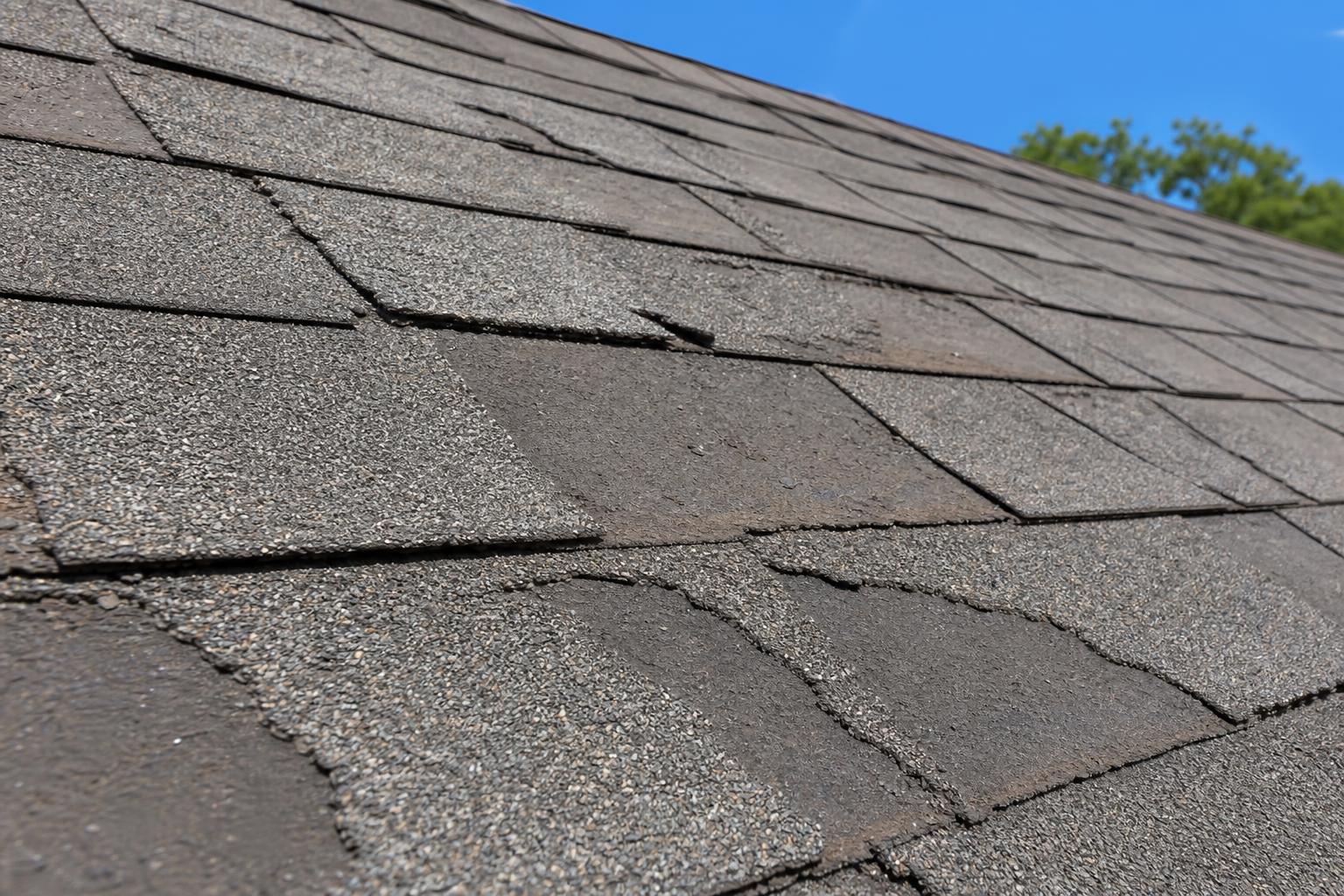
- Granules accumulating in gutters or downspout discharge
- Shingles curling at corners (cupping) or along edges (clawing)
- Dark, bald patches on the roof surface
- More than two or three active repair points in the same year
- Roof age over 18 years for asphalt
When to Call for an Inspection
The best time to know where your roof stands is before you need to replace it under pressure. A pre-season inspection in spring or fall — after the last freeze-thaw cycle in spring, or before the first hard freeze in fall — gives you the assessment without the urgency. Second Best Roofing inspects roofs across Nashville, Brentwood, Franklin, Murfreesboro, and 6 more Middle Tennessee communities. Call (615) 448-7720.