
Why Hail Damage Is Different From a Tree Branch Through the
Roof
When a tree falls on a house, the damage is obvious. Hail damage is different. A significant hail event can strip protective granules across an entire roof face, stress adhesive seals on every shingle, and crack flashings and pipe boots — without creating a single visible hole. The damage shows up as water intrusion 6-18 months later when the degraded materials finally fail.
This delay is what hail damage documentation is designed to prevent. By establishing the cause of the damage at the time it occurred, you preserve the insurance claim and the timeline.
The 48-Hour Checklist After a Nashville Hail
Event
1. Document the storm event. Screenshot the National Weather Service report or radar showing hail size and track. Note the date and time. This becomes part of your claim documentation.
2. Walk the exterior — don't get on the roof. Look at your gutters, downspouts, window AC units, fence caps, mailbox, and any metal vents. Hail creates distinctive round divots on soft aluminum. If you see consistent denting on multiple metal surfaces, your roof almost certainly sustained impact damage.
3. Check gutters and downspout discharge. An unusual volume of granules in the gutters after a hail event indicates granule impact across the shingle field.
4. Call a roofer before calling your insurance company. An experienced roofer documents damage differently than an adjuster — and typically more completely. Having your own documentation before the adjuster arrives gives you a baseline that can't be disputed later.
5. File the claim. Once you have documentation in hand, file with your insurance company. Request to have a roofer present at the adjuster inspection.
What Hail Damage Actually Looks Like
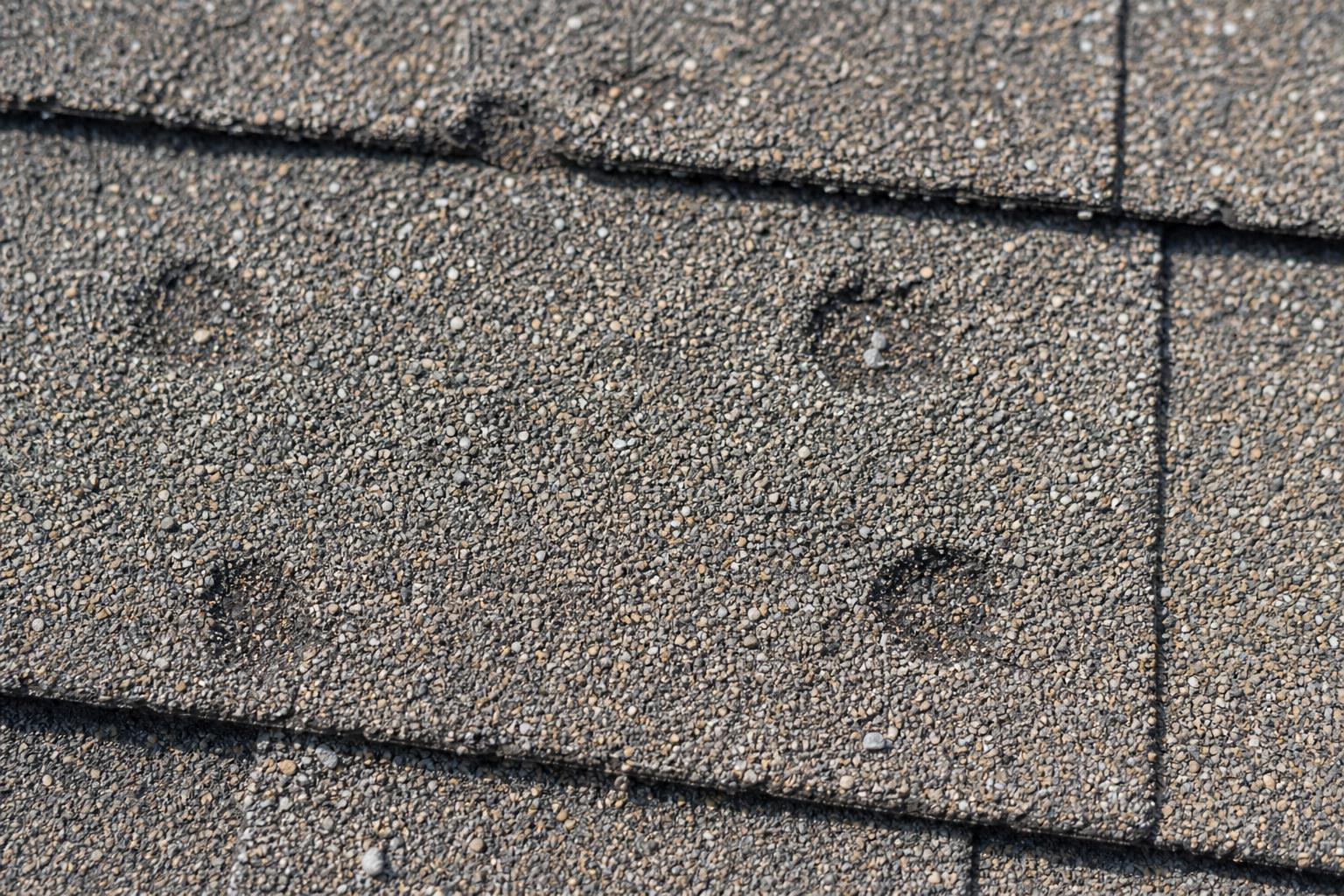
Hail impact on asphalt shingles creates a characteristic bruising pattern: circular impact points where the granule layer has been knocked away, often leaving a dark, slightly soft spot on the shingle surface. On metal components, it creates round dimples.
Larger hail (1"+ diameter) can fracture the shingle substrate entirely. Smaller hail in the 0.75"-1" range is harder to see from the ground but still causes significant granule displacement.
Second Best Roofing's Storm Damage Process
We inspect the roof, document all damage with photos and a written scope, and attend the adjuster inspection with you. If the initial settlement is too low, we help you file a supplement for any legitimately missed items.
Nashville homeowners: call (615) 448-7720. If you have active water intrusion after a storm, we also provide 24/7 emergency tarping.